

Boston’s housing market has long been known for its competitiveness and that’s not changing anytime soon. With a thriving job market, world-class universities, and leading hospitals, the city attracts professionals ready to invest in one of the most dynamic real estate environments in the country. From young tech innovators to experienced medical and finance professionals, many see moving to Boston as a strategic decision for growth and stability.
In this post, we’ll explore who’s actually buying houses in the Boston area, what drives the demand, and how Boston MA real estate continues to evolve in 2025.
The Boston Buyer Profile: Who’s Dominating the Market
Boston’s real estate market tends to attract experienced buyers with established careers. The city’s combination of economic strength, educational excellence, and lifestyle appeal continues to draw well-educated, high-income professionals.
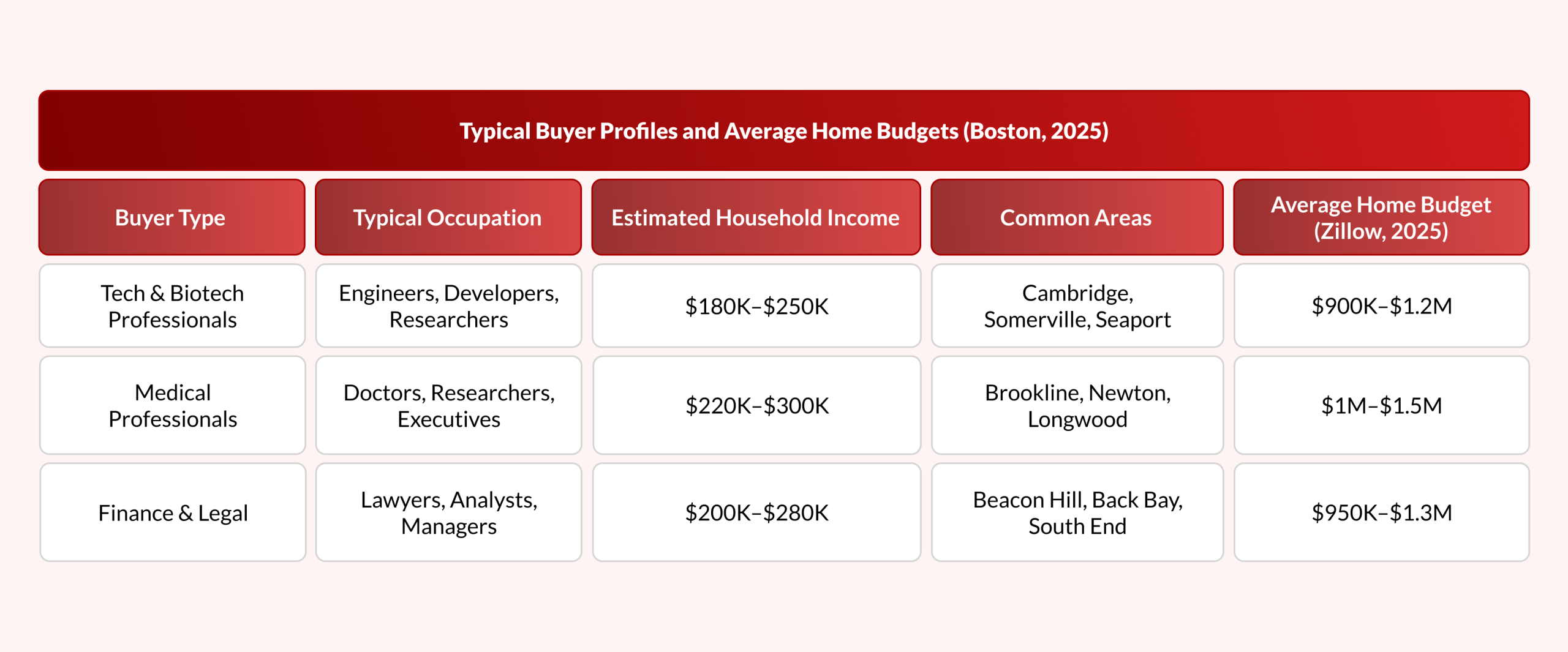
According to Zillow, the average home value in Boston is around $765,000 in 2025, with steady year-over-year appreciation. This naturally shapes who can afford to buy and where they choose to live.
1. Tech and Biotech Professionals
Boston’s innovation ecosystem – powered by companies such as HubSpot, Biogen, and Amazon – attracts professionals from across the country. Many are relocating from other technology hubs, moving to Boston to be near world-leading research institutions like MIT, Harvard, and Boston University.
These buyers often choose modern condos and townhouses in Cambridge, Somerville, and the Seaport District, where they can balance career and lifestyle in thriving city areas.
2. Doctors, Researchers, and Healthcare Executives
The Boston MA real estate market also benefits from the city’s concentration of medical and research institutions. Leading hospitals such as Mass General, Brigham and Women’s, and Boston Children’s Hospital continue to attract top-tier healthcare professionals and researchers.
With strong salaries and research funding opportunities, these buyers frequently look for homes in Brookline, Newton, or near the Longwood Medical Area, which offer convenient access to major hospitals and a balanced residential setting.
3. Lawyers, Finance, and Corporate Managers
Boston’s legal and financial sectors are another key driver of demand. The city hosts regional offices of global law firms and financial institutions, drawing experienced professionals who often have dual-income households – for example, a lawyer married to a doctor or a finance manager married to a tech professional.
As one local agent explains, “You have people at the top of their field, many from prestigious universities, often married to others in similar positions. That kind of buying power defines the Boston market.”
These households often invest in Boston MA real estate in Beacon Hill, Back Bay, and the South End, known for their historic architecture and proximity to downtown offices.
Why Moving to Boston Still Makes Sense
Even with rising home prices, moving to Boston remains attractive to professionals seeking strong career opportunities and a vibrant city lifestyle. The area offers a balance of innovation, culture, and community that appeals to a wide range of buyers.
- Close access to universities and hospitals
- Expanding biotech and AI industries
- Historic areas with a mix of modern developments
- Easy access to coastal and cultural amenities
For buyers exploring more affordable options, read CRG’s Top Areas for Affordable Houses in Boston.
Where These Buyers Are Moving
Each professional group gravitates toward different areas based on their work, lifestyle, and commute preferences.
1. Cambridge and Somerville: The Tech Core
Walkable areas and modern developments make these ideal for young professionals working in innovation and research.
See the Boston Apartments Fall Market Guide for insights on renting before buying.
2. Brookline and Newton: Medical and Academic Hubs
These areas remain popular with medical professionals and university staff due to proximity to major hospitals and research centers.
First-time buyers can explore nearby options through the Belmont Real Estate Guide.
3. South Boston and Seaport: Executive Living
Corporate leaders and finance professionals often choose high-rise condos and modern waterfront properties with city access.
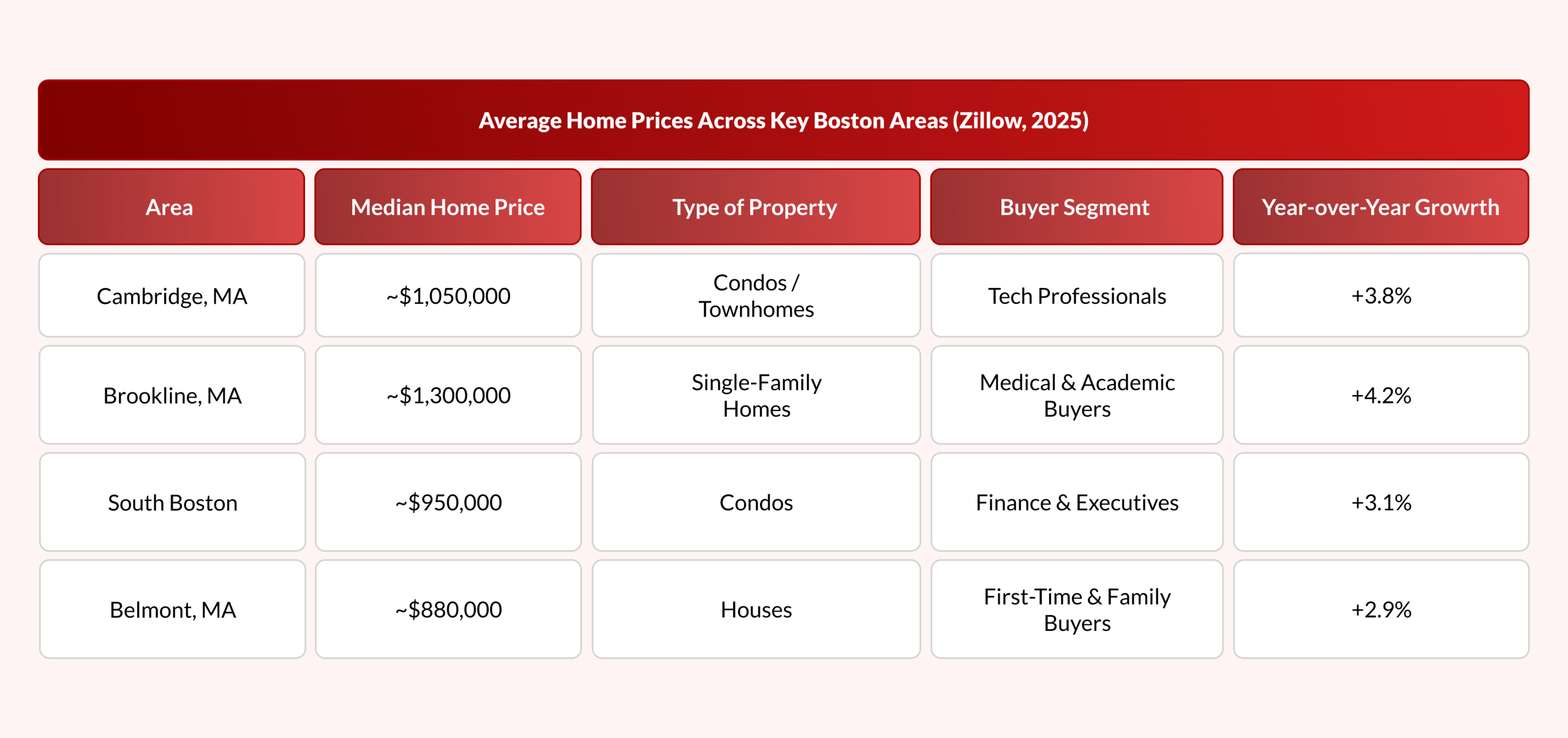
Insert Table Here: Comparison of median home prices across Cambridge, Brookline, South Boston, and Belmont (Zillow data).
Alt Text: Table comparing average home values in Boston’s major areas.
For additional insights, visit Boston Home Prices: What Buyers Should Know.
Boston Real Estate Market Outlook (2025)
The Boston MA real estate market continues to favor sellers, though signs of stabilization are emerging. Higher interest rates may slow price growth slightly, but Boston’s economic base, anchored by education, healthcare, and technology keeps demand strong.
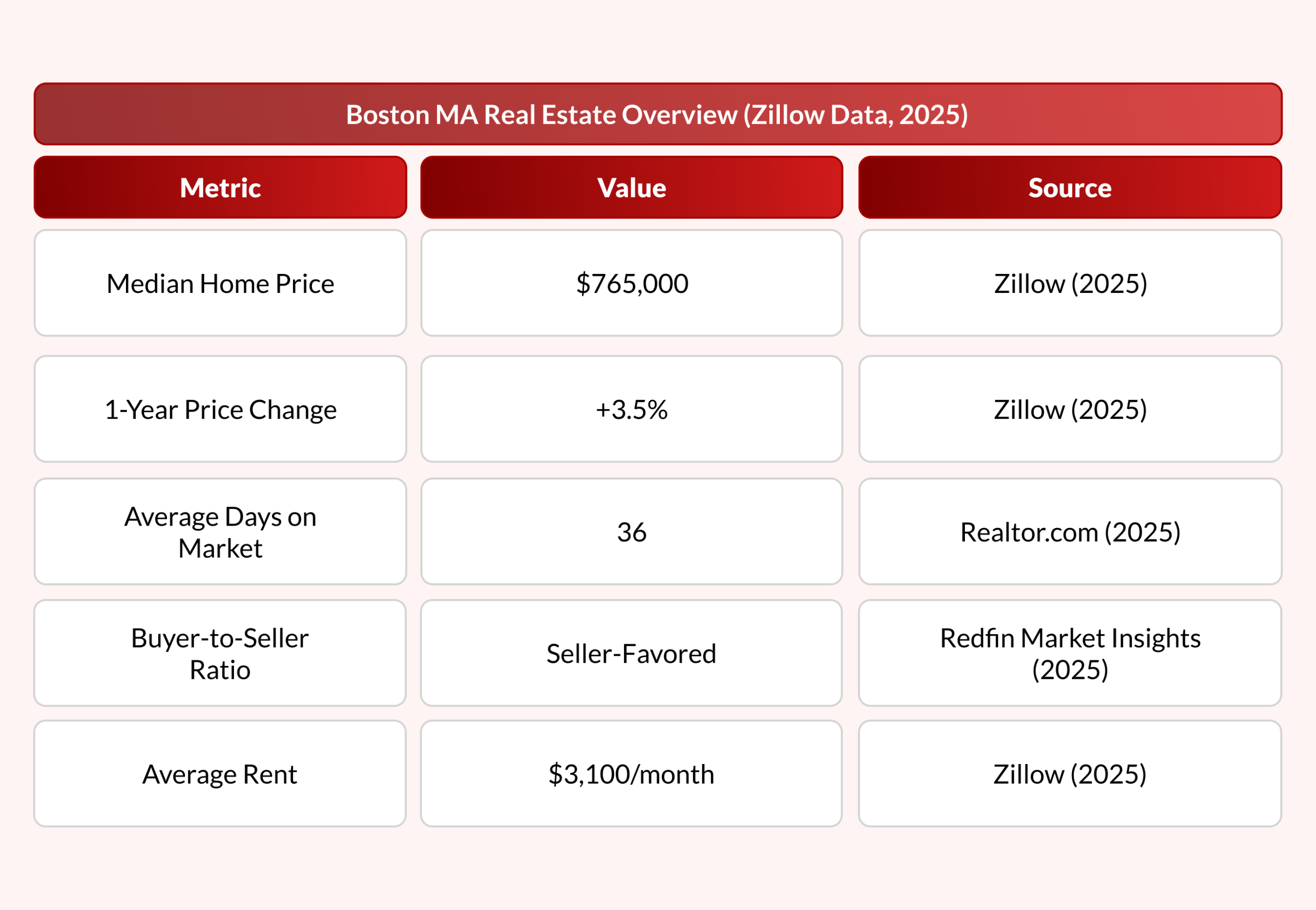
The city’s long-term appeal ensures that moving to Boston remains a stable investment choice for many.
For up-to-date data, explore Fall 2025 Boston Housing Market Trends and Boston Home Prices: What Buyers Should Know.
If you’re evaluating whether to rent or buy, our CRG Agents can guide you through the process and help identify the right area based on your goals and budget.
Frequently Asked Questions
Who can afford to buy a home in Boston today?
Typically, buyers in the Boston MA real estate market are professionals in technology, healthcare, finance, or law. Many are dual-income households with a combined annual income above $200,000, allowing them to remain competitive in this fast-paced market.
Are there affordable areas near Boston for first-time buyers?
Yes. For those interested in moving to Boston but searching for more affordable choices, suburban areas like Waltham, Watertown, and Belmont provide lower price points and convenient commuting options.
Is now a good time to move to Boston?
Yes. While prices remain elevated, Boston’s job market, steady appreciation, and limited inventory make it a strong long-term investment. Working with an experienced CRG Agent can help buyers make informed decisions based on current trends.
Conclusion
So, who is actually buying houses in the Boston area? The answer lies in Boston’s enduring mix of education, innovation, and career opportunity. From healthcare specialists to technology leaders, the city’s buyers reflect ambition and stability.
If you’re planning on moving to Boston or exploring Boston MA real estate, a trusted CRG real estate agent can help you understand local trends and find a property that fits your lifestyle and goals.
Recent Comments